
Dr. Conrad’s Story: A Physician’s View
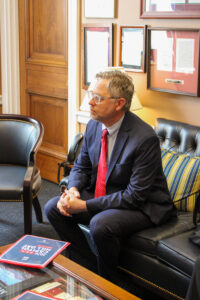
When Dr. Miles Conrad first encountered HHT, it was not through a textbook definition.
It was through a patient.
During his radiology residency, Dr. Conrad learned about the connection between hereditary hemorrhagic telangiectasia and pulmonary arteriovenous malformations, or PAVMs. He was already interested in pulmonary artery procedures, but one case during his training changed the direction of his work in a lasting way.
A woman came to his hospital from Mexico. She was undocumented, had a child, and was living with numerous pulmonary AVMs. Her case was complex. Her care team believed she could tolerate pulmonary AVM embolization, and the procedure itself was technically successful. But after the procedure, she passed away. Her child was left orphaned.
For Dr. Conrad, the experience stayed with him.
“As a provider, that had a very big impact on me,” he said. “I never forgot about her and her family and her case.”
That moment pushed him to understand more about HHT, AVMs, and how to make care safer for patients. Later, when he arrived at the University of California, San Francisco, he found himself surrounded by others asking similar questions. Researchers and clinicians were looking closely at HHT and vascular malformations. Within a few years, that shared commitment helped lead to the launch of an HHT Center of Excellence at UCSF in 2014.
Today, Dr. Conrad cares for patients who often arrive with complicated histories, unanswered questions, and years of experience navigating a healthcare system that was not built for rare diseases.
That is one of the first things he thinks about when he hears the phrase Visible Together.
To him, it means strength in community and strength in awareness. It means recognizing how isolating it can be to live with a rare disease. Patients with HHT may enter an emergency room, primary care office, or specialty clinic and meet providers who are unfamiliar with the condition. The healthcare system is often designed to recognize what is common. HHT asks it to slow down, listen carefully, and understand what may not be obvious at first.
That mismatch can leave patients feeling stigmatized, dismissed, or alone.
“The antidote to being alone and alienated in a healthcare system,” Dr. Conrad said, “is to be recognized as part of a group.”
That recognition is central to Cure HHT’s work. It brings patients together, but it also brings providers, researchers, and advocates together. It creates a shared language. It improves education. It helps move HHT from something hidden and misunderstood into something visible, studied, and treated with the seriousness it deserves.
For Dr. Conrad, the relationship between provider and patient is not secondary to care. It is part of the care.
As an educator in the School of Medicine, he teaches relationship-centered communication. The idea is simple, but powerful: trust has therapeutic value. When the relationship between a physician and patient is strong, patients are more likely to stay engaged in their care, ask questions, follow through on screening, track symptoms, and make informed decisions.
Dr. Conrad often begins appointments by acknowledging that he has an agenda as a physician—but the patient has one, too. What do they want to know? What are they hoping to get out of the visit? What else is bothering them? What do they think is important?
Those questions matter because HHT patients are not passive participants in their care. Many have spent years learning their bodies, managing symptoms, and advocating for themselves or their families. They arrive with knowledge that deserves to be heard.
“The physician is just there to serve,” Dr. Conrad said.
That kind of listening can change what happens next.
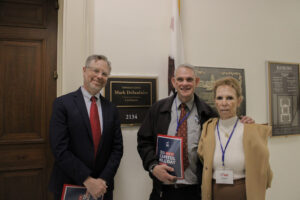 In Carol’s case, one important moment came down to guidance. She had a liver AVM, and Dr. Conrad helped her understand why a liver biopsy could carry serious risk. It was not a dramatic intervention in the way people often imagine lifesaving medicine. It was a conversation. A warning. A provider with HHT expertise recognizing a danger that could have been missed.
For him, that moment reinforced something essential. “The small things can be just as impactful as complex medical care.”
Dr. Conrad believes the HHT community is standing at the front of a wave of major innovation. New therapies are being studied. Scientific momentum growing. The future of HHT treatment is beginning to look different than it did even a few years ago.
But progress does not happen automatically.
It requires research. It requires clinical expertise. It requires education for patients and providers. It requires systems that help people find care earlier and receive guidance from clinicians who understand the disease. It requires sustained investment from people who believe rare disease patients deserve more than delayed answers and fragmented care.
Dr. Conrad has seen many organizations at work. Cure HHT, he said, stands out as cohesive, well-run, and deeply connected to both advocacy and science. To him, support for Cure HHT has a direct impact on advancing care, innovation, and the development of therapies.
This HHT Awareness Month, we are Visible Together because visibility changes what is possible.
Your gift to Cure HHT helps support the education, advocacy, research, and expert care that move this community forward. It helps more providers understand HHT. It helps more patients find answers. It helps build a future where rare disease care is not defined by isolation, but by connection, knowledge, and hope. Thanks to a generous group of donors, a significant portion of gifts made during HHT Awareness Month will be matched.
Thank you, Dr. Conrad, for the wonderful care that you give.
Such an amazing story!
Great story about an excellent doctor.