
Carol’s Story: A Life Made Visible
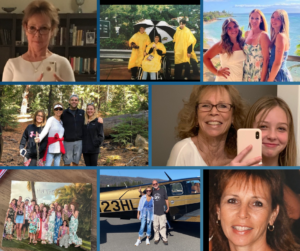
For much of her life with hereditary hemorrhagic telangiectasia (HHT), Carol had to become her own medical advocate.
She had to explain her condition. She had to ask for what she knew her body needed. She had to insist, even when she was exhausted, bleeding, severely anemic, and frightened, that her symptoms were not routine—and her care could not be routine either.
There were moments when the burden of being understood fell entirely on her.
“I need you to keep me alive,” she remembers telling one of her physicians years ago.
Carol was in her late 30s then. She was a wife, a mother of four, and working full-time for a major oil company. She traveled often for work. From the outside, she was building a career, raising a family, and moving through the world with the kind of determination that does not leave much room for collapse.
 But HHT was always there.
Carol was diagnosed several years earlier, though symptoms had started much earlier in her life. What began as occasional bleeding became hemorrhages. Over the decades that followed, she endured years of ER visits, surgeries, severe anemia, and frequent transfusions. There were seasons when she needed blood as often as twice a week. There were ambulance rides. There were procedures. There was even a flight from San Francisco to Boston where she bled so badly she nearly lost consciousness, and the pilot considered making an emergency landing.
Still, she kept going.
“I powered through,” Carol says.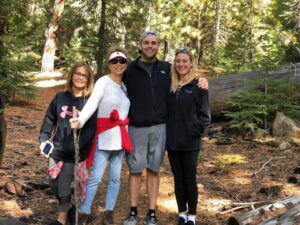
That phrase can sound simple until you understand what it requires. It meant spending eight hours in the ER, receiving blood, and continuing with her day. It meant managing a serious blood vessel disorder while working, parenting, traveling, and trying to protect the future she had built. It meant living with symptoms that were visible in crisis but often invisible in the spaces where she most needed understanding.
At work, Carol chose to keep her diagnosis private. She shared only that she had nosebleeds and sometimes needed cautery. She did not want HHT to limit her career or change how people viewed her. When she was asked to take an 18-month assignment in Nigeria, she declined, quietly weighing the risks of access to safe blood without explaining the real reason.
That is one of the hidden costs of HHT: the calculations people have to make in silence.
For Carol, Visible Together means an end to that isolation. It means patients, families, Cure HHT, physicians, and HHT Centers of Excellence standing in the same light. It means no patient should have to know more about HHT than the medical team treating them. It means no one should be left to fight alone for care that could save their life.
Today, Carol is 70. She is a widow, a mother, a grandmother of ten, a traveler, a reader, a music lover, an advocate, and a devoted presence at her grandchildren’s games, concerts, and plays. Family is the center of her life.
And after years of fighting to survive HHT, she is finally receiving expert, coordinated care.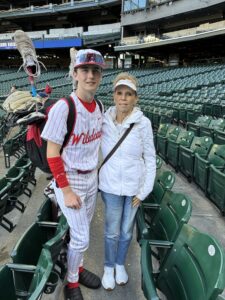
Under the care of the UCSF HHT Center of Excellence, Carol says her life has changed dramatically. Her care team looks at her case together, not in silos. She is monitored. She has routine follow-up. She receives treatment that has helped reduce the anemia that once shaped so much of her life.
“My quality of life has gone up exponentially,” she says. “I can breathe.”
That kind of change is not abstract. It is the difference between living around a disease and being able to live more fully within the life you love.
Carol recalls one moment with particular clarity. Her regular healthcare provider had recommended a liver biopsy after imaging raised concerns. Before the procedure, Carol spoke with Dr. Conrad at the HHT Center of Excellence. His response was immediate: absolutely not. Because of her liver AVMs, the procedure could have been dangerous.
 Carol believes that moment may have saved her life.
It is the kind of moment that shows why HHT awareness cannot stop with patients. Physicians need to know what HHT is. They need to understand how it can affect the nose, lungs, brain, liver, heart, and gastrointestinal tract. They need to know that routine care is not always safe care for someone with HHT.
That is why this work matters now.
Visibility is not just awareness for awareness’ sake. It is earlier diagnosis. It is fewer emergency rooms. It is safer care. It is research. It is Centers of Excellence. It is families having a chance to understand what they are facing before a crisis arrives.
During HHT Awareness Month, your gift to Cure HHT helps make stories like Carol’s more visible. It supports education, expert care, research, advocacy, and the work needed to ensure that patients and families are not left to navigate HHT alone. Thanks to a generous group of donors, a significant portion of gifts made during HHT Awareness Month will be matched.
Make a gift today and help us make HHT visible.
Carol’s story touched my heart.
Having acces to a HHT Centre of Excellence is a privilege that We here in New Zealand do not have.
Families here have lost Loved ones due to routine care procedures that Patients with HHT should not have had, because of Physicians having no idea what they are dealing with.
The lack of Education and Awareness around HHT in New Zealand has personally cost me the loss of My Brother and Mother…..and I am most certain that We are not the only Family that have had to deal with this…….self advocacy becomes a battle every hospital visit, without supportive wrap around services DR Google unfortunately becomes our ED workers and Doctors first go to for a Diagnostic and Treatment reference. The applied routine care process around procedures for differing presentations can worsen the situation and also cause irreparable harm.
It lifts my heart that Carols ife can now be one that is being lived to the fullest, and not one of fear or anxiety, and with the support of a coordinated and consistent Medical team providing timely screening and safer care.
These stories give Us all Hope, hope that maybe an HHT Centre of Excellence will be established here, in Aotearoa.
Nga Mihi,
Susan.
Carol’s story touched my heart.
Having acces to a HHT Centre of Excellence is a privilege that We here in New Zealand do not have.
Families here have lost Loved ones due to routine care procedures that Patients with HHT should not have had, because of Physicians having no idea what they are dealing with.
The lack of Education and Awareness around HHT in New Zealand has personally cost me the loss of My Brother and Mother…..and I am most certain that We are not the only Family that have had to deal with this…….self advocacy becomes a battle every hospital visit, without supportive wrap around services DR Google unfortunately becomes our ED workers and Doctors first go to for a Diagnostic and Treatment reference. The applied routine care process around procedures for differing presentations can worsen the situation and also cause irreparable harm.
It lifts my heart that Carols ife can now be one that is being lived to the fullest, and not one of fear or anxiety, and with the support of a coordinated and consistent Medical team providing timely screening and safer care.
These stories give Us all Hope, hope that maybe an HHT Centre of Excellence will be established here, in Aotearoa.
Nga Mihi.
Carol you have my prayers; I too have had similar experiences of doctors not aware of HHT. even in HHT centers for certain conditions you may be experiency; I have learn if the doctor says ( I think I have heard of that) it time to leave. I am a male 71yrs.
old and I have had more procedures than I can count, including skin grafts in the nose, gastric surgery and 2 yrs ago a liver transplant. I am blessed now to find some good doctors, doing very well.
Thank you for your prayers. I return that to you. Although I haven’t had a liver transplant yet, I’m monitored every 4 months. Sounds like we have similar experience’s. I hope your new liver is doing well and wish you all the best.. We Hht Warriors need to stick together a support each other. Good luck!.
Carol is an amazing woman! She is a fighter and a survivor. I’ve been friends with her for oh, 50 years or more. She lets nothing stop her! She is truly an inspiration to all of us.🥰
I felt like Carol.
In Brazil have not any doctor especially for patients HHT.
I always talk about curehht, but the majority, unfortunately, don’t want to involved.