
What the HHT?
A blog for the HHT community
Front Page Announcements
Dr. Anthony Anzell Presented with $20,000 Research Grant
The University of Pittsburgh’s Dr. Anthony Anzell Presented with $20,000 Research Grant from Uplifting Athletes Dr. Anzell is among 10 rare disease researchers to be awarded a grant at Uplifting Athletes’ Young Investigator Draft on Feb. 3 at Lincoln Financial Field Pittsburgh (January 9, 2024) — Uplifting Athletes, a nonprofit organization dedicated to serving the…
Read MoreCure HHT Canada now registered as a charitable organization in Canada
We are excited to announce the establishment of Cure HHT Canada as a registered, tax-deductible charitable organization in Canada! We heard your feedback on how important this designation is to you and we’ve worked diligently over the last two years to reach this milestone. The establishment of Cure HHT Canada marks a concentrated effort to expand and increase our support of our community in Canada!
Read MoreE-News: Insider Connection
Check out our latest E-News! Delivered monthly, straight to your inbox – stay up to date on all things HHT including research, clinical trials, webinars, awareness, educational opportunities and more! Sign up today!
Read MoreGabby Choi: There is so much power in patients advocating for themselves…
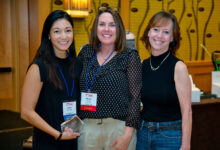
As a kid, Gabby Choi remembers spending hours in the bathroom with her mother, who also had HHT, as she dealt with her hemorrhagic nosebleeds that seemingly kept getting worse and worse.
It had a significant impact on her mom’s quality of life – with the frequent bleeds interfering with work or preventing her from wanting to socialize in fear of a bad bleed striking.
Sadly in 2017, Gabby’s mother Julia was diagnosed with pancreatic cancer. Because of her progressed HHT, she didn’t qualify for any of the clinical trials that could have given her a better chance at fighting the cancer.
Gabby’s own HHT symptoms remained relatively mild during her childhood. She’d go on to swim collegiately at Emory University and receive her MBA from Harvard Business School, but the experiences with her mother motivated her to get more involved with the HHT community and help in any way she could.
Read MoreYear End Appeal – Curing for Generations
Curing for Generations is more than a campaign slogan, it is our commitment to the thousands of families affected by HHT and a promise to never give up!
For many, HHT has taken far too much – families whose photo albums include faces of loved ones lost, whose lives were cut short because of this disease – as well as pictures of those who don’t yet know the journey that lies ahead. But in those albums, there is also hope — like the sweet face of baby Rachel Erickson, whose life was saved by the quick intervention of Cure HHT and the skilled expertise of an HHT physician.
Read More